Stealth System
The Stealth System is used to create a cat-and-mouse contest between the Guards in the area and the Player Characters that are attempting to sneak past them.
This section describes the rules that are critical for the Stealth System. There are rules for Surprise Attacks here instead of in the Combat System, since that's where these two rulesets overlap. The two systems also share similar concepts of Rounds and Turns, and as such can be used together, with some of the party performing Stealthy Actions and some of the party engaging in Combat Actions.
Objective
The Objective of the Stealth Game is to move around and do things without being Detected. If the PC becomes completeley Detected, the Stealth Game ends and a new encounter begins. This new encounter is often combat or a social challenge.
Primary Game Mechanics
Stealth Tokens
The Stealth Tokens have two sides, the Stealth Side which represents a lack of detection, and the Detection Side. If the Player Character would be detected, they can spend Stealth Tokens to avoid it.
The Stealth Side

The Detection Side

Stealth Pool
The PCs each have their own individual Stealth Pool of Stealth Tokens, which tracks how noticeable they are. This Stealth Pool should have a number of tokens equal to the character's Stealth Pool Maximum. These tokens are then flipped from one side to the other as the game advances and Actions are taken.
A character's starting Stealth Pool Maximum is based on their Size Category.
Size Category to Stealth Pool
|
Creature Size |
Stealth Pool Base |
|
Tiny |
7 |
|
Small |
6 |
|
Medium |
5 |
|
Large |
4 |
|
Huge |
3 |
|
Gargantuan |
2 |
|
Colossal |
1 |
Characters can increase their Stealth Pool using Talents for various Classes (Bounty Hunter, Martial Artist, Scoundrel and Spy).
Heat Token
Heat Tokens are used to track how aware the Hostile NPCs are of the PCs in general. They can be used in the Stealth Game to track how much Suspicion the sneaking NPCs are generating.
Unaware Side

Detection Side

Suspicion Meter
The NPC Guards have a collective “Suspicion Meter”, a subset of the Heat Meter, which tracks how suspicious the Guards are becoming.
This meter is a collection of Heat Tokens and can range in size from 6 to 10:
| Guard Type | Meter Size |
|---|---|
| Elite Guards | 6 |
| Military Guards | 7 |
| Professional Guards | 8 |
| Random Guards | 10 |
The Suspicion Meter is increased by 1 at the end of each Round in a Stealth Encounter. It can also be increases by Detection Events or failed Distractions (see below).
When the Suspicion Meter is maxed out, all Guards get a communication and begin actively Searching.
Concealment
In order to Hide from an opponent and enter into "Stealth", a character must first gain Concealment. Concealment means that no opposing character can maintain Line-of-Sight to the character.
- Line-of-Sight
- On a battlemap if you can draw two lines from one corner of the square of Creature A to 2 corners on the square of Creatuer B, then Creature A has Line-of-Sight to Creature B.
Outside of using a battlemap, the Gamemaster will always let player characters know if they have Line-of-Sight to other characters, and if the player character performs the correct Actions (see Observe below) they can find potential places that will break the Line-of-Sight from enemy characters to them.
There are two main ways to gain Concealment:
- Cover Concealment - hiding behind or inside of something
- Shadow Concealment - hiding in the shadows
Cover Concealment
The simplest form of Concealment is hiding behind something. However, just because a character has concealment from one direction, doesn't mean that they have concealment from every direction. For the purposes of establishing Concealment to Hide, there must not be any opposing characters who have Line-of-Sight to the hiding character.
After Concealment has been established and the character has Stealth Tokens flipped, any new opposing characters gaining Line-of-Sight to the Hiding/Sneaking character will count as a Spotted Event (see below).
Shadow Concealment
The other main way to gain Concealment is by hiding in shadows. If the character uses an Action to Observe, they may be able to spot places that offer Shadow Concealment. Shadow Concealment is easier to get during the night on a planet than the day, for obvious reasons. If there are no lights out and no moon(s) to reflect light, the entire surface of the planet may have Shadow Concealment.
Unfortunately there are many ways to disrupt Shadow Concealment. Flood lights, Fusion Lanterns, Flashlights and even Glowsticks are obvious technological ways to disrupt a shadow. But there are also many species (animal or higher) that can ignore Concealment from Shadow due to having eyes that can see different wavelengths of light, or vibration detection, or echolocation, or some means of detecting the position of a creature in the darkness.
Force Powers and Concealment
The Sense Power allows a Force Sensitive to locate a creature through (almost) any kind of Concealment. However, unless the Force User is actively looking for the character they won't think to use their Force Power.
If they do decide to use their Sense Power, the only things that can hide a character from it are:
- If the target character is a droid
- If the target character is wrapped in something invisible to The Force
Starting a Stealth Encounter
If the Guards in the area are unaware of the Player Characters, the PCs all begin with their Stealth Pools all flipped to the Stealth Side. If the Guards are currently aware of the Player Characters general location, then each PC must roll their Intelligence + Hiding skill against the (highest) Guard's Passive Alertness. Each uncancelled Hit rolled gives that PC a Stealth Point, with Critical Hits counting as two Hits.
- Passive Alertness
- (Perception + Alertness) / 2
NPC Guard Suspicion Levels start at zero, but can be increased before the Stealth Encounter by a poor Reconnaissance Challenge showing or a high general Heat Meter level (see Heat Meter). If the Suspicion level maxes out, the Guards will all begin actively Searching the area for intruders. This increases the difficulty of the Stealth Encounter dramatically.
Basics of Play
During play, a Player Character will perform various Actions. These Actions may flip Stealth Tokens between the Stealth and Detected sides. In addition, stealthed characters may attempt to get past guarding characters. In the event that a stealthed character enters the detection range of a guard character, it's possible for a Detection Event to occur. Stealthed characters can sacrifice Stealth Tokens to use as extra Hits when they would be detected.
Though using Stealth Tokens as Hits can avoid a True Detection Event, it will increase the Suspicion Level for the entire Encounter (see Detection Events below). If a character does not have enough hits, even when spending Stealth Tokens, to avoid this True Detection, being detected will end the Stealth Encounter entirely.
The length of the Guard Suspicion meter will depend on how disciplined and coordinated the NPC Guards are. A military force that is well trained will have a shorter Suspicion Meter than a rag-tag group of thugs.
Stealth Action System
Stealth has Rounds, Turns and Actions the same as Combat.
Stealth Round
The Stealth Game is made up of Rounds. Each Round every character in the area, Scout or Guard, gets a Turn. The Scout characters can be grouped together, with all Guards going after them in a group.
When all characters have had a Turn, that Round ends and a new one begins.
Some effects happen “until the beginning of the character’s next turn,” this is similar in concept to a Round, but is more of a Round relative to that Character, instead of whomever was first in the Initiative order. For that reason, it is refered to as a "Relative Round".
- Relative Round
- From the end of a character's turn until the beginning of their next turn.
Stealth Turn
During a player’s turn they can perform 2 Actions. These can be Movement Actions, such as Sneaking or Dashing, Perceptive Actions, such as Searching or Observing, or Standard Actions, such as Distracting or interacting with the environment.
Stealth Actions
PC Actions
Player Characters can perform 2 of the following types of Actions on their turn:
- Hide: Gain Stealth Tokens equal to Stealth Skill Hits. Patrolling Guards will only notice a hiding character that is directly in their Detection Range without Concealment.
- Sneak: Move 1/2 their normal Movement Speed, costs 0 Stealth Tokens. Roll Sneaking skill against a Guard's Passive Alertness if a Guard is near.
- Dash: Move their full normal Movement Speed, costs 1 Stealth Token. Roll Sneaking skill against a Guard's Passive Alertness if a Guard is near.
- Observe: Carefully and quietly examine the environment to reveal Question Tokens, find Hiding Spots and determine Guard Movement Patterns. Costs 0 Stealth Tokens.
- Distract: It costs 1 Stealth Token to attempt to Distract. The PC rolls Sneaking skill against the NPC's Deduction. If the PC succeeds, the NPC Guard becomes "Distracted". If they fail, they lose 1 Stealth Token and the Guard will begin Searching on their next Turn.
- Search: Thoroughly search an area for intel or treasure, this action is not stealthy and as such costs 2 Stealth Tokens. This Action is also used as a proxy for anything else that the PC wants to do that isn't one of the above Actions. The Searching Action uses a Searching skill roll.
- Surprise Attack: The PC makes an attack against an unsuspecting NPC Guard. Costs 1 Stealth Token.
- Other Action: The PC attempts to perform another non-stealth action, this costs 2 Stealth Tokens.
Surprise Attacks
If a player character chooses to Attack an unaware Guard, that Guard can only use their Armor Defense (and Armor Soak) to defend. This is a Noisy Event [4 dice] and costs 1 Stealth Token. If this attack does not completely KO the Guard, it will generate a Detection Event.
NPC Actions
Guard NPC characters can also perform 2 of the following 6 types of Actions on their turn:
- Rest: The Guard is resting and their Passive Alertness is reduced by 2.
- Observe: The Guard is actively observing, their Passive Alertness is increased by 2.
- Patrol (Fast): The Guard is moving quickly, but their Passive Alertness is reduced by 1.
- Patrol (Slow): The Guard is moving slowly, their Passive Alertness is normal.
- Search/Pursue: The Guard is actively Searching or Pursuing, they roll Searching instead of using Passive Alertness.
- Distracted: The Guard is distracted and will be at 1/2 their normal Passive Alertness.
The Gamemaster records which move the Guard performed so that if the Player Character attempts to sneak past them, they know what the Guard's current Passive Alertness is. In this way, the 2nd Action is more important than the first.
Dice Rolls & Stealth Tokens
PC Rolls
Stealth Skill: Starting Stealth Pool
If Guards are aware of the PCs, the PCs must find a spot with Concealment (either Shadow or Cover) and compose a dice pool with Stealth against the Guards' Passive Alertness. They then roll this dice pool to determine their starting number of "stealthed" Stealth Tokens. Motivation may be spent prior to the roll to add additional dice, and the Concentrate Action may be used to convert Focus Results into Hits.
If the Guards are unaware of the PCs, no roll needs to be made, and all PCs start with all tokens in their Stealth Pool flipped to the Stealth side.
Stealth Skill: Distraction
The PC rolls their Stealth against the Guard's Deduction. Uncanceled Hits mean that the Guard has become Distracted.
Athletics or Acrobatics Skill
Normally during a Stealth mission a PC will roll their Stealth to regenerate Stealth Tokens. For Sneak and Dash, the PC spends the appropriate Stealth Token and then rolls their Stealth. A PC may need to roll Athletics or Acrobatics during a Dash, depending on the circumstances of the action, and if they fail that roll they may lose an additional 1-2 Stealth Points.
Observation Action
PCs need to roll Observation for the Observe Action. The PC rolls their Observation to flip Question Tokens, spot Guards and Guard Behaviors, or locate good Hiding Spots (places that have Concealment due to Shadow or Cover).
For flipping Question Tokens, the PC can flip any Question Tokens that are a number of squares away equal to the number of Hits (with Critical Hits counting as 2 Hits) they've rolled, so long as these are in the character's direct Line-of-Sight.
Searching Skills
A PC can roll their Searching skill for the Search Action. The difficulty is based on the GM's determination of how obscure the thing is that the PC is looking for. This may also take a number of rounds to complete if it is deeply obscured.
| Number of Hits | Description of Obfuscation |
|---|---|
| 2 | The secret is lightly obscured but not intentionally hidden. |
| 4 | The secret is hidden in a small and disorganized area, or somewhere on a single Guard. |
| 6 | The secret is hidden in a large collection of sorted data or organized files, or in a secret panel or hidden pocket. |
| 8 | The secret is deeply buried in a custom filing system or beneath mounds of unsorted materials. The PC must create a grid-search and spend multiple Rounds looking. |
Other Actions and Reactions
The PC will roll Attack Dice for any Actions not listed above. They may need to roll Defense Dice to avoid Traps or Noise Makers as a simple Reaction.
NPC Rolls
Passive Alertness
The default difficulty for sneaking past an NPC is that NPC's Passive Alertness.
Alertness Skill
On the NPC Guards Turn they may roll Alertness to notice a PC that is not in Concealment. They will roll Alertness and they must equal or exceed the PC's Stealth skill total. If the NPC succeeds, the PC can then sacrifice Stealth Tokens from their Stealth Pool to act as Hits in order to avoid being completely detected.
A PC that is in Concealment will not be detected by a Guard's Alertness check no matter what, so no roll needs to be made.
Searching Skill
If an NPC Guard is Searching, they will roll their Searching instead of Alertness against the PC's current Stealth skill total. A player character that is not in Concealment will be automatically found by a Searching Guard. A Searching Guard can roll to find a stealthed character in Concealment.
If a Guard succeeds on this roll they will generate a Detection Event (see below).
Special Events
These Events are the precursors to Detection. The PC has very little time (somtimes only a single Action or a Reaction bought with Motivation) to move out of the area or they will be Detected.
Noise Events
If a PC interacts with a Question Token on the map that is Noisy, or they perform a Surprise Attack (or perform another, equally noisy action) they generate Noise.
The GM will roll a number of RED Dice equal to the Noise Level (1-3). The number of Hits indicates how much Noise was propagated to the rest of the environment. An NPC Guard can hear the Noisy Event if they are in the appropriate Range Band away from the number of Hits (Critical Hits count as 2 Hits):
| Number of Hits | Detection Range |
|---|---|
| 1 | Melee |
| 2 | Close |
| 3 | Short |
| 4 | Medium |
| 6 | Long |
| 8 | Extreme |
An NPC Guard hearing a Noisy Event will begin Searching and move towards the source of the Noise Event on their next turn. If the Suspicion Level is maxed out, the nearest Guards can spend Motivation to immediately React and move towards the Noise. If they do, this would be an “Interruption” and would allow these Guards to generate a Detection Event.
Spotted Events
If a PC interacts with a Question Token on the map that is a Guard or Security System, they generate a Spotted Event. A PC can also generate a Spotted Event by moving through the direct Line-of-Sight of a Guard (Sneaking or Dashing).
When a Spotted Event occurs, the PC can use their Second Action (if they are on their first) or spend 1 Motivation to immediately take another Action. If this Action takes the PC out of the range of the detector (Security System or Guard), no Detection Event is triggered, though any Guards involved may begin Searching on their next turn.
If the PC cannot take another Action, this triggers a Detection Event (see below). Security Systems are assumed to have the same Alertness level as the Guards on the map and are rolled for normally.
Guards' Turn
The other way that a Spotted Event can occur is on the Guards' Turn.
If a PC is not in Concealment and the Guard moves into a range that they could detect the PC, the GM will roll the Guard's Alertness against the PC’s current Stealth skill total as the difficulty. Note: If a character is in Concealment, the guard cannot make this roll.
If a PC is in Concealment and a Searching Guard moves into a range that they could detect the PC, the GM will roll the Guard's Searching against the PC’s current Hiding skill total as the difficulty. If the PC is not in Concealment, they are detected automatically if the Guard's Searching skill level is equal to or higher than the current Stealth skill total (no roll is made).
If a Guard's Alertness or Searching roll gets a number of Hits equal to or greater than the PC's current Stealth skill total, the PC can spend tokens from their Stealth Pool to act as Hits. Even if the PC successfully avoids Detection, the Suspicion Level may still go up, and a Spotted Event is generated. If the PC cannot spend enough Stealth Tokens, a Detection Event is created (see below).
Detection Event
Detection Events can occur on either the Guards' Turn as they move into an area with a PC, or on the PC's turn if they generate a Noise or Spotted Event and cannot spend Stealth Tokens to escape.
Whenever a Detection Event occurs, the global Suspicion Level is increased by 1. If the Guard has another Action, they may attempt to raise an alarm, approach the NPC or even attack.
The Gamemaster may also rule that a Detection Event ends the Stealth Encounter. This may be in special circumstances where being detected at all poses a risk to an innocent NPC or alerts the Guards to the point where Stealth is no longer possible. The Gamemaster should either make this Failure Condition explicit in the narrative or so heavily implied and forshadowed that the players knew it was a possibility.
Question Tokens
Question Tokens are special two-sided tokens which appear as a question mark '?' to the Players on a Stealth Encounter Map and have a hidden effect on the other side. The Gamemaster will select a number of Question Tokens that a Stealth Encounter Map should have and marks their location during Encounter Design. During play the player character's Actions will cause Question Tokens to be flipped to the "revealed" side.
Question Token Interaction
A PC will interact with Question Tokens on a stealth map by moving adjacent to them or using the Observe Action. If the PC moves next to the Token, it is flipped face-up and that may affect the PC. Traps, Noise Events and Guards are some of the potentially bad results a PC could bump into if they flip a Question Token via proximity. During this Reaction, the PC will roll Defense Dice for Agility or Toughness to react to a trap or Guard.
If the PC chooses instead to Observe, they roll their Observation dice pool and then they can automatically flip any and all Question Tokens that are in their line-of-sight and their distance from the PC is less than or equal to the number of Hits on the Observation roll (with Critical Hits counting as two Hits).
Stealth Question Tokens
 Noise 1: Generates 1 die worth of Noise for a Noise Event.
 Noise 2: Generates 2 dice worth of Noise for a Noise Event.
 Noise 3: Generates 3 dice worth of Noise for a Noise Event.
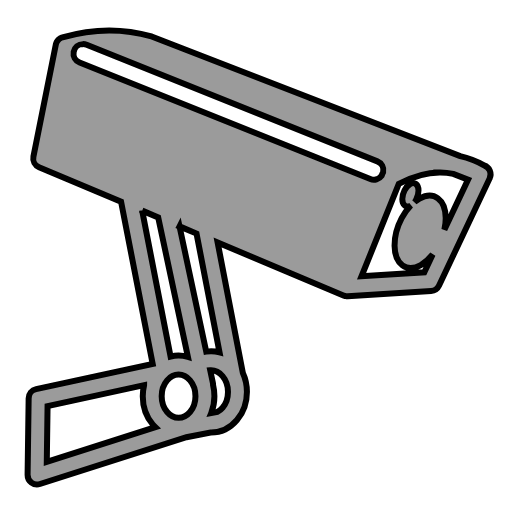 Security System: Can detect a PC. Generates a Spotted Event.
 Guard: An NPC Guard not on a patrol. Generates a Spotted
Event. Replace with an actual Guard.
Guard: An NPC Guard not on a patrol. Generates a Spotted
Event. Replace with an actual Guard. Trap: PC rolls a defense to avoid becoming caught by the trap or resist its effects.
 Treasure: PC can collect the treasure using an Action after the token has been flipped.
 Lock: The lock must be bypassed by a key or with a Lock Picking skill check (Other Action -2 to Stealth Pool).
 Key: Can be collected by a PC and used on a Lock.
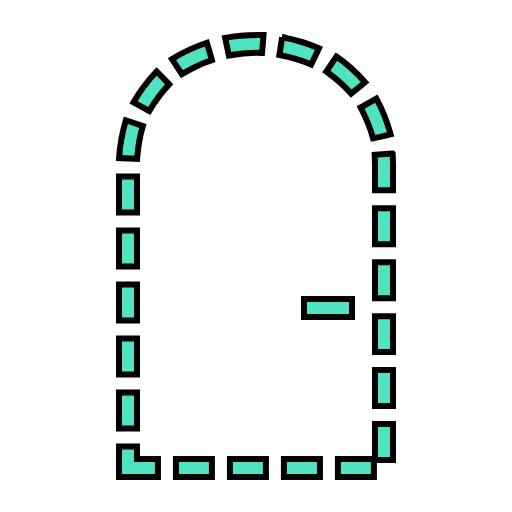 Secret Door: The PC finds a hidden door, though it could still be locked.
 Vantage: This point gives the PC a very good view of the area and can reveal other Question Tokens or Guard Patrols.
 Concealment (Shadow): PCs can attempt to hide in the Shadows here.
 Concealment (Cover): PCs can attempt to hide behind the Cover here.
Guard Qualities
Guards will have a variety of behavioral qualities that will adjust how they will react. Guards either have these qualities or they don't.
- Alert: An Alert Guard will get +2 to their Alertness checks.
- Suspicious: If the Guard participates in a Detection Event, Global Suspicion levels increase by an extra +1.
- Cautious: The Guard will not approach a Distraction, but will instead Observe, increasing their Alertness by +2.
- Coordinated: The Guard always travels with another Guard.
- Hostile: The Guard will attack immediately in a Detection Event.
Stealth Die [Optional]
The Stealth Die is a six-sided die which has one side for each of the six different types of Stealth Actions and Guard Actions. The GM may require that the player leave the die on the face that equates to the second action they took on their Turn. This allows the Gamemaster to better resolve the Guard’s actions and to determine if they are able to Detect the Scout characters.
PC Stealth Die
|
Die Side |
Meaning |
Icon |
Stealth Token Change |
|
1 |
Hiding. The character is hidden and still. |
|
+0* |
|
2 |
Sneaking. The character is moving slowly and carefully. |
|
+0 |
|
3 |
Dashing. The character is moving quickly. |
|
-1 |
|
4 |
Observing. The character is observing carefully. |
|
+0 |
|
5 |
Searching. The character is searching for something or interacting with the environment. |
|
-2 |
|
6 |
Distracting. The character is attempting to distract a Guard. |
|
-1* |





NPC Guard Die
The Gamemaster can also use the same die to track the behavior of the Guards on the map. This allows the GM to better track when a Guard has a bonus or penalty to their Alertness.
The GM can also roll the die to give the Guard a random behavior.
|
Die Side |
Meaning |
Icon |
Alertness Change |
|
1 |
Resting. The Guard is taking a break. |
|
-2 |
|
2 |
Patrolling (Slow). The Guard is moving slowly and carefully. |
|
+0 |
|
3 |
Pattrolling (Fast). The Guard is moving quickly, and not paying attention. |
|
-1 |
|
4 |
Observing. The Guard is observing carefully. |
|
+2 |
|
5 |
Searching. The Guard is actively searching. They roll Searching and can find characters in Concealment in the area. |
|
+0 |
|
6 |
Distracted. The Guard is distracted with reduced Alertness. |
|
50% |