The Basics
This section describes the basics of the game, the Dice, Symbols and Tokens.
The Dice
Starchasers uses two pools of dice. A pool of D8s is used primarily for Attacks and Skill checks. A pool of D6s is used mostly for Defenses and the GM's Difficulty Dicepool.
Though the dice have a different number of sides, a 5 or higher is considered a "Hit" (or "Evade") by default, and when using a Focus Token, a 3 or higher is considered a "Hit". With a result of 8 being a "Critical Hit" (see below).
The Attack Die
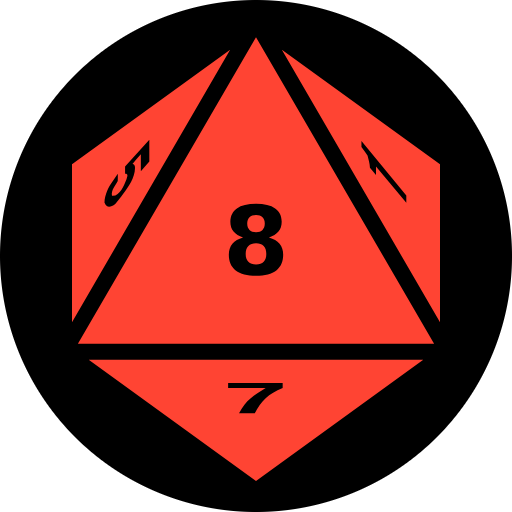
The players and Gamemaster roll dice pools of 8-sided dice for any Attack or Skill check.
A result of 5 or higher on a die is considered a "Hit" or success.
An 8 is a Critical Hit, which counts as two successes.
If a character has a Focus Token available, they can spend it to count anything 3 or higher as a "Hit".
|
Roll |
Description |
Icon |
|
1 |
Nothing |
- |
|
2 |
Nothing |
- |
|
3 |
Focus |
|
|
4 |
Focus |
|
|
5 |
Hit |
|
|
6 |
Hit |
|
|
7 |
Hit |
|
|
8 |
Critical Hit |
|
The Defense Die
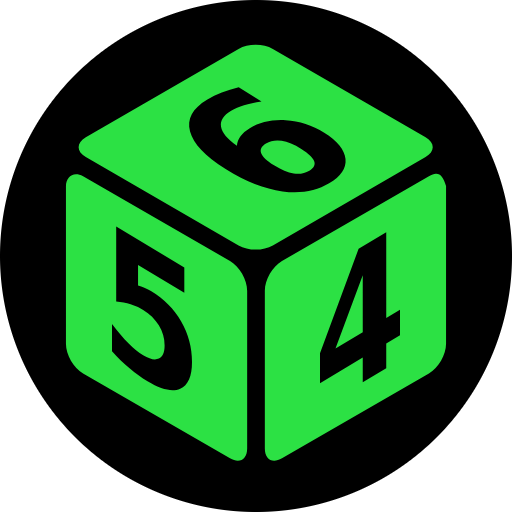
For Defending and the GM's Difficulty Dicepool the players and Gamemaster roll a pool of 6-sided dice.
A result of 5 or 6 on a die is considered an "Evade", which cancels out a "Hit".
All normal "Hits" must be canceled first before a Critical Hit can be canceled.
If a character has a Focus Token they can spend it to count 3 or higher as an Evade.
|
Roll |
Description |
Icon |
|
1 |
Nothing |
- |
|
2 |
Nothing |
- |
|
3 |
Focus |
|
|
4 |
Focus |
|
|
5 |
Hit |
|
|
6 |
Hit |
|
Dice Symbols
This section describes the various symbols on the three sets of dice.
- Hit
- Critical Hit
- Evade
- Focus (Attack)
- Focus (Defense)
Hit

The "Hit" result is used for skill checks and for combat.
For skill checks, the GM will determine a difficulty which will be the minimum number of Hits that the player must get in order to succeed.
The player will compose a dice pool and roll that number of dice.
If the player rolls the required number of Hits on their dice pool, they succeed, otherwise they fail.
For combat, the player rolls a smaller dice pool, but the player can add their weapon's damage number as additional dice.
These attack dice are rolled against the green defense dice of the target. Each Evade result cancels out a Hit.
Hits must be canceled before Critical Hits (see below).
Any left-over uncanceled Hits will do 1 point of damage each to the target's Hit Points.
Critical Hit

The "Critical Hit" result has different meanings in skill checks and combat.
For skill checks the Critical Hit counts as 2 Hits for the purposes of overcoming difficulties.
For combat, a Critical Hit behaves as a normal Hit in that it can be canceled by an Evade, so long as all other normal Hits have already been canceled.
A Critical Hit also does 1 damage if it gets through past the Evade results uncancelled. But in addition to those behaviors, if a character is struck by a Critical Hit, they must mark that against their character. These Critical Hits (or “Crits”) are only removed if the character rests. At the end of at least 1 minute of rest, all Crits Taken are cleared. Each Crit sustained after the first increases the chance of Injury. Injuries are much harder to heal than damage to Hit Points.
Evade

Combat
The Evade result is used when a character is defending in combat or in an opposed roll. Each Evade result cancels out a Hit or a Critical Hit. Normal Hit results must all be canceled by Evades before the Critical Hits can be canceled.
Focus (Attack)

Skill Checks
These Focus Results can be converted into Hits from the Concentrate Action or Criticals Hit and other things by character abilities and weapon qualities.
Combat
All Focus Results can be converted into Hits if the character performs the Concentrate action in combat. Some weapons and abilities can convert Focus results into other kinds of things, such as Movement Points, AOE damage, penetrating damage, Hits and even Critical Hits.
Focus (Defense)

Combat
These Defense-Die Focus Results can be converted into Evades if the character performs the Concentrate Action. They can also be converted into Evades or other results by Class Abilities and some types of Equipment (such as special Armors).
Alternative Dice System
Starchasers was originally designed with the X-Wing 8-sided dice. There are two types of X-wing dice: the red "attack" dice and the green "defense" dice.
If you cannot or don't want to obtain X-Wing dice, then please use the Main Dice System which approximates them.
Players and the GM will roll pools of these dice to resolve actions inside and outside of combat.
The red X-Wing die is used the most, as it is used for Attribute Checks, Skill Checks, and Attacks used during combat.
The green X-Wing die is used almost exclusively for defenses and reactions.
Probabilistic Differences Between Dice
The X-Wing system uses D8s for both Attack Dice and Defense Dice. Starchasers uses D8s for Attack Dice and D6s for Defense Dice. This creates a slight difference in probability when it comes to defending.
Percentage for Evasion
| Roll | X-Wing D8 | Starchasers D6 |
|---|---|---|
| Defending Without Focus | 37.5% | 33.3% |
| Defending With Focus | 62.5% | 66.64% |
What this shows is that defending without Focus has inferior odds on the Starchasers D6, but superior odds when using Focus.
Since the odds are about 4% worse without Focus and 4% better when using Focus, the designer felt that this change was close enough to keep the feeling but make it easier for more people to play Starchasers.
X-Wing Defense Die
|
Roll |
Description |
Icon |
|
1 |
Nothing |
- |
|
2 |
Nothing |
- |
|
3 |
Nothing |
- |
|
4 |
Focus |
|
|
5 |
Focus |
|
|
6 |
Hit |
|
|
7 |
Hit |
|
|
8 |
Hit |
|
Dice Rating Meanings
Attribute Levels
Each character has different Attribute Levels.
These determine the common dice pool they can use for all tasks for that attribute.
|
Power Level and Number of Dice |
Potency Description |
|
1 |
Weak |
|
2 |
Normal |
|
3 |
Talented |
|
4 |
Exceptional |
|
5 |
Genius |
Skill Levels
The Skill Level of a character's associated Skill determines how many additional Dice are rolled.
|
Skill Level and Number of Dice |
Mastery Level |
|
0 |
Untrained |
|
1 |
Beginner |
|
2 |
Novice |
|
3 |
Intermediate |
|
4 |
Expert |
|
5 |
Master |
Enhanced Dice
Sometimes a character gains a bonus to their dice levels, this can come from their Species ability, from a Class ability or from spending Motivation to buy up to 5 dice. This dice pool increase could also come from a Force Power or Ancient Technology. These enhancements only temporarily increase the character’s dice pool. These bonuses can stack, so characters may end up rolling a lot of dice.
Action Resolution (non-combat)
To succeed in a task, a character has a dice pool composed for them and rolls an Action Score (number of Hits) against a Difficulty Number assigned by the gamemaster. The gamemaster can consult a difficulty table, or the statistic block of a creature, trap or other encounter to determine the Difficulty Number. The Gamemaster then rolls that number of dice. Any Evasion symbols cancel out Hits.
Difficulty
Standard Difficulty Table
|
Difficulty Name |
Number of Difficulty Dice |
|---|---|
|
Very Easy |
1 |
|
Easy |
2 |
|
Intermediate |
3 |
|
Challenging |
4 |
|
Hard |
5 |
|
Very Hard |
6 |
|
Heroic |
7 |
|
Epic |
8 |
|
Legendary |
9 |
|
Almost Impossible |
10 |
Success
If there are any uncancelled Hits (or Crits), then the character has succeeded in the task or action.
Failure
If there are no uncanceled Hits (or Crits), then the character has failed to accomplish the task or action and must try something else.
Critical Success
If the character has uncanceled Critical Hits, the character has achieved a Critical Success and they succeed greatly at the task or action. In addition to any narrative benefits, the character may receive a mechanical bonus, such as inflicting a Status Condition.
Dice Pools
Players compose and roll a dice pool to complete Actions that their characters perform. They also compose dice pools for damage dice.
Composing the Action Dice Pool
The combination of Attribute Levels and Skill Levels combine to determine the number of dice used. Bonuses from Equipment and Powers can also apply. The standard character sheet has boxes to calculate the Attribute + Bonus + Skill for each Skill. This makes it so the GM can just say, "Roll Stealth" and the player picks that total and doesn't need to do extra math at the table.
Equipment Bonuses
Equipment can provide bonuses to skills, or it can be required for any use of the skill at all. An example of the former would be Electrobinoculars, which provides a +1 bonus to Scouting and Navigation, but is not absolutely required for those skills. An example of the latter would be the Medkit, which is required to use the First Aid skill at all.
Equipment can provide between 1-3 bonus dice.
Force Powers likewise can provide bonuses from 1-3. This makes the maximum dice pool for most characters 16 dice.
Opposed and Contested Rolls
Sometimes a character will be directly opposing another character. When this occurs there are two ways to determine the outcome:
NPC Opposed Roll
The initiator of an action (often the attacker or aggressor) will usually roll a dice pool of an Attribute plus a Skill in an Attack Dice Pool.
If the target character is Defending, Resisting or Reacting to another character's actions, they will often roll one of their Attributes and Skills in a Defense Dice Pool.
Both characters compose dice pools. The attacker or aggressor composes a dice pool of Red Attack Dice. The defender composes a dice pool of Green Defense Dice. If the attacker/aggressor gets Hits or Critical Hits which are not canceled by the defender's Evades, then they win the Opposed Roll, otherwise the defender wins.
PC Contested Roll
A Contested Roll is where all participants are Player Characters (PC), or when the GM needs to determine levels of success (i.e. an Initiative Roll). In this case all players roll the same Attribute + Skill pool, and the player with the highest number of Hits wins. In the case of a tie, each player rolls a single die against the other and the higher roll wins.
Bonuses and Penalties
If the Game Master needs to give a character a bonus, they can grant them +1 die.
If the Game Master needs to give a character a penalty, they can subtract 1 die from their dice pool.
This should represent a change to the Character’s abilities, rather than a change to the world, the latter of which is more naturally represented with changes to the required difficulty number.
Tokens
There are a number of different Tokens that are used in Starchasers. These Tokens are used as Resources typically, and many of them have different meanings if they are flipped from one side to the other.
Focus
Characters who Concentrate can utilize the Focus resource. This resource allows them to use Focus Results as Hits or Evades during the appropriate roll.
Focus Token
Using a Focus Token
A player can spend a Focus Token that their character has to convert all Focus Results on their next roll into Hits. This works for Attack rolls, Defense rolls and Skill rolls.
Usually a character can only have 1 Focus Token at a time.
Gaining a Focus Token
The standard way that a character gains a Focus Token is using the Concentrate Action. This Action has no associated roll, and allows the player to receive a Focus Token from the GM.
Characters can sometimes gain Focus Tokens from other sources, such as Leadership Actions.
Motivation
All Player Characters have access to a special resource called Motivation, though they begin each game session with 0 Motivation. Player characters gain Motivation from using their Motivators (see below), becoming injured, and accomplishing adventure goals, which grant the whole party Group Motivation.
For some Adventures the players keep their Motivation from session to session, other Adventures has the Motivation cleared at the end of each Adventure.
Motivation Token
Player Characters begin each session with 0 Motivation.
Motivation is gained and spent during play, which is outlined below.
Spending Motivation
Motivation can be spent for a variety of effects:
- Add Dice: Can add 1 die per Motivation Spent up to 5.
- Spent to Activate a Class Ability or Combat Special Move
- Spent by a Force User to Activate a Force Power
- Spending 1 Motivation allows a player character that has been KO’ed, to recover. If that character had zero Hit Points, they recover with 1 Hit Point.
- Spending 1 Motivation can allow the PC to take a Reaction, either to an act against that character or an ally or neutral NPC within 3 squares.
Gaining Motivation
There are multiple ways that a character can gain Motivation:
- Motivators: These grant individuals Motivation when they perform the associated action.
- Injuries: Taking damage that reduces Hit Points grants 2 Motivation.
- Group Motivators: These are group accomplishments that inspire the entire party.
Damage and Injuries give Motivation
Whenever a character suffers damage from combat or the environment, that character gains 2 Points of Motivation.
Motivators and Motivation
A player character can have three active Motivators. One of these can come from their Flaw, and the other two come from their Class. Players can choose any Level Zero Motivators from Classes they have or are actively apprenticing in.
Motivators have a few criteria that each one must meet:
- Discrete Action: It must be a discrete action. This means that it must take some amount of time (typically 10 minutes) and it must take place in an observable way (e.g. no internal monologues).
- Beneficial to Party: It should have a beneficial effect on the party in some tangible way, or…
- Entertaining and Engaging: It can enhance the roleplaying experience by being entertaining, tragic or make things more challenging for the party.
*If the Gamemaster and the rest of the party are getting frustrated with a particular Flaw-based Motivator, they can ask the player to change their activated Motivator to a Class Motivator instead.
Group Motivators
Group Motivators grant each member of a Player Character Party 1-2 points of Motivation. Common group motivators are:
- Triumphing in Combat (interpersonal or starship)
- Solving a Mystery
- Infiltrating a secure place
- Escaping from a secure place
Groups can also come up with custom Group Motivators based on their combined goals, examples could be:
- Capturing a Bounty
- Rescuing an Innocent
- Finding an ancient Artifact
Bonus Motivation
GMs can optionally grant Motivation for game play:
- Telling a really good joke
- Roleplaying really well
- Great Teamwork (Group Motivator)
In addition the Commander's Challenge is a way that a party leader can potentially grant their team Motivation and gain some of their own.
Leftover Motivation and Bonus XP
Any Motivation remaining at the end of a Session becomes Bonus Experience Points for the associated character. This is converted at a 1-to-1 ratio.
Stealth Tokens
The Stealth Token (Stealth Side)

Detection Side

These are thoroughly described in the Stealth Mission section of the Player’s Guide. However, here is a brief description of the mechanism.
The PCs each have their own individual Stealth Pool of Stealth Tokens, which tracks how noticeable they are. This Stealth Pool can have any number of Stealth Tokens in it, from zero to the character's Stealth Pool Maximum. A character's starting Stealth Pool Maximum is based on their Size Category.
These Stealth Tokens are then activated and deactivated based on the character's actions. If the character would be detected, the Gamemaster resolves a Detection Event which may end up flipping a number of Stealth Tokens and/or giving the player character a chance to react before the Guard detects them.
Taking certain actions, such as the “Hide” action, increases the total number of Stealth Tokens. A character cannot have more than 5 Stealth Tokens usually. When a character would be detected, instead they may lose a number of Stealth Tokens. As long as the character still has at least 1 Stealth Token, they are not detected.
However, if the detection event occurs and would cause the sneaking character to lose Stealth Tokens when they have zero, the character is detected.
Character Attributes
Main Attributes
The following eight Attributes are the main ones that either compose a dice pool or create a difficulty for an opposed roll.
Strength
Strength is the Active aspect of brawn, and it indicates physical strength. The ability to lift, throw, jump (for height or distance), crush or smash things. Strength is used directly in melee combat for both the To-Hit and Damage rolls.
Toughness
The ability to resist toxins, diseases, environmental hardships and special damage. This Toughness forms the creature’s Block difficulty and is the base for the derived attribute Hit Points.
Deftness
The more Deftness a character has, the better they are with their hands. This can be the hand-eye coordination needed to accurately fire a ranged weapon, or it could be the kind of precision needed to disarm a mechanical trap or construct an intricate device.
Agility
A fast character is able to move and act quickly. This can be to dodge an incoming attack, to race across the rooftops in pursuit of a cutpurse, or to quickly slam the lid down on a trap that’s accidentally been triggered.
Intelligence
An Intelligent character can be highly knowledgeable and learned, or tricky and good at creating deceptions. Intelligence is rolled for understanding alien technology, comprehending alien languages or customs, and plotting a hyperspace route. It is also used for coming up with clever lies to beguile a diplomat or a bluff to deceive a planetary governor.
Perception
A character’s Perception is used for their physical senses, sight, hearing, touch, taste and smell (and others if they are alien). Perception is also used for mystical senses, and to see through deceptions. Perception is used to spot stealthed characters and incoming danger. Finally Perception is the base attribute for Initiative.
Charisma
A Charismatic character can get others to like them and convince them to do things for them. Their Charisma might be based on physical attractiveness, force of personality, an inherent likability, or a strength of character. Whatever it is, it’s a kind of magnetism that makes others respond to the character in social situations.
Confidence
A high level of Confidence can prevent a character from being beguiled by someone with a lot of Charisma. This Confidence can be a manifestation of stubbornness, a lack of interest, or a strong feeling of self-worth. It allows the character to resist the charms and wiles of others. Confidence is also used for intimidating others and for types of leadership.
Force Rating
The ability for the character to sense, use and manipulate The Force. Each point of Force Rating allows the player to flip 1 Force Point. Any non-Droid character can choose to allocate their bonus Attribute points to Force Rating.
Force Powers
Characters that have a Force Rating will also have access to Force Powers. These are special abilities that draw upon The Force and have amazing effects. There are some rules to Force Powers which are universal to all of them.
Activating a Force Power always takes either at least 1 Motivation or 1 Dark Side Point.
Dark Side Points are always available, however each point used either moves the character's Morality 1 point towards The Dark Side or it inflicts 1 Stress.
Using a Force Power usually takes an Action, though some can be used as Reactions as well.
Characters must study, train and practice to become better at using Force Powers, just like any Class.
Force Powers come in "Power Sets" that have 10 levels. These are similar to Classes in that they have a Level Zero when a character first learns them that grants basic abilities, and have an Ultimate Ability if they are mastered at level 10.
Force Power Sets (mini classes)
The Dark Side
The Dark Side of The Force is always available to tempt those that are Force Sensitive.
Whenever a character performs a selfish, cruel or brutal action, they fall 1 level towards The Dark Side (this cannot be converted to Stress).
In addition, if a Force Sensitive character wants to Activate a Force Power but doesn't have the Motivation to do so, they can spend 1 point of Dark Side Energy to Activate the Force Power. For each Dark Side Point spent, the Force Sensitive must make an Emotional Control roll against 1 + their Current Dark Side score. If the character succeeds in the roll, they suffer 1 Stress but they do not fall to the Dark Side. If the character fails this roll, they fall 1 level closer to The Dark Side.
If a character has 10 levels of Dark Side, they have fallen to The Dark Side and will need to be redeemed or they are no longer playable characters.
Note that there is no mechanical benefit to having 10 levels of Light Side, except it makes it harder to fall to The Dark Side.